UK Gambling Support Tools and Bank Blocking Software
 Available in GB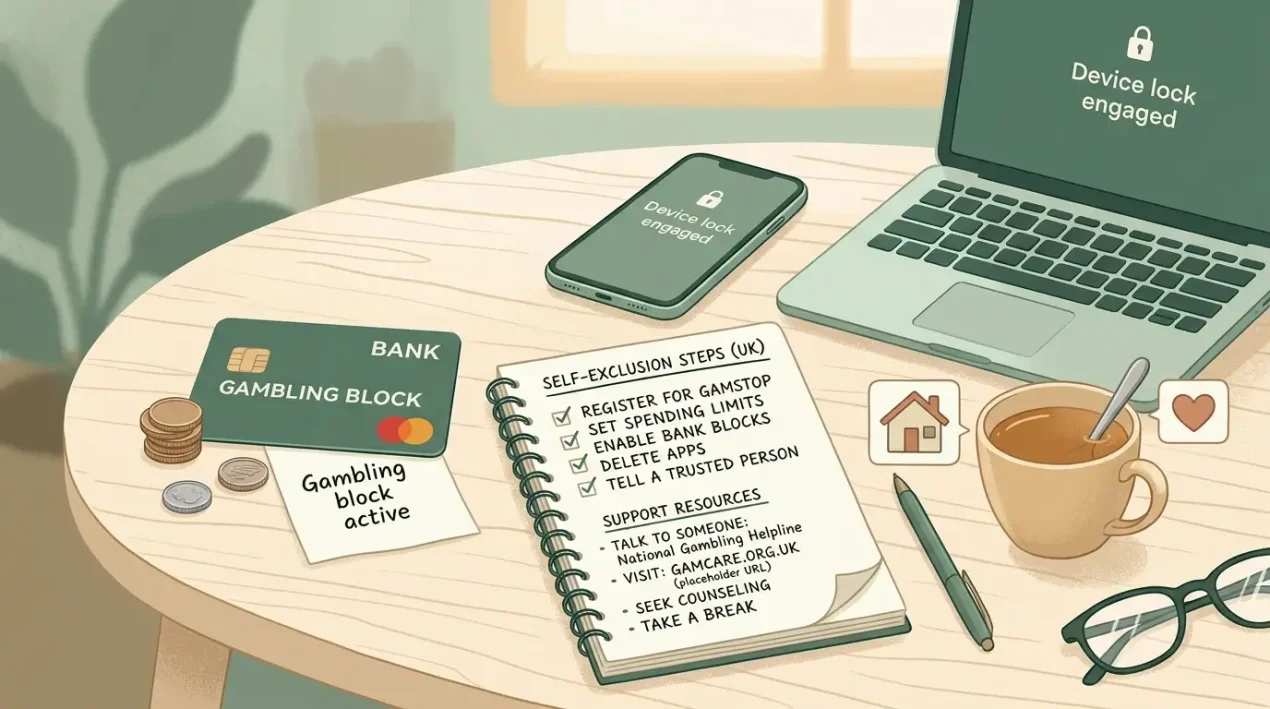
If you are already self-excluded, worried about losing control, or searching for another way to gamble, the useful next step is to add friction and support. This page keeps the focus on protection, not on gambling alternatives.
- No bypass steps
- Layered protection
- Support first
Start with today Fraud or dispute?
Step-by-step route
Actionable Steps for Safer Gambling and Self-Exclusion
- Right now: move away from the payment screen, close the gambling page, and put time between the urge and any deposit. If someone you trust can help, tell them you are trying to stop the next payment.
- Today: strengthen access controls. GAMSTOP covers online gambling companies licensed in Great Britain, and blocking software or device-level filters can add another layer. Many banks also offer gambling-payment blocks.
- This week: make the blocks easier to keep than to remove. Review devices, saved cards, app access, marketing messages and budgeting. Do not use this review to look for alternative gambling routes.
- If debt, fraud or exposed details are involved: contact your bank or payment provider promptly. For debt pressure, MoneyHelper provides guidance on gambling and debt. For suspected fraud, use official fraud-reporting routes.
Protection layers
What each tool can help with
Tool or route How to think about it
GAMSTOP Use it as a self-exclusion layer for online gambling companies licensed in Great Britain. It is not a shortcut to emergency counselling, and it should not be treated as something to work around.
Blocking software and device filters These can reduce access to gambling websites or apps, especially when used across devices. They work best when set up before an urge becomes urgent.
Bank gambling-payment blocks Many banks allow customers to block gambling payments, and some blocks include a cooling-off period before removal. Check your own bank’s current process rather than assuming every bank works the same way.
Venue self-exclusion and local support Land-based gambling can need separate steps. Use venue self-exclusion and local support routes where they apply, especially if online blocks do not cover the behaviour you are trying to stop.
Official reference points: GAMSTOP explains its registration route, the Gambling Commission explains bank gambling-payment blocks, and GambleAware describes layered blocking and self-exclusion options.
If you are looking for a site outside GAMSTOP
That search can be a sign that self-exclusion is under pressure, not a sign that you need a different casino. A safer route is to pause, make payments harder, add a block you do not control alone, and speak to a recognised support service.
It is highly important to realize exactly what “not on GAMSTOP” means for a UK player before exploring alternative gaming options.
For comprehensive safety guides and reviews, return to the top non Gamstop casino resource and review our expert recommendations.
Read what the phrase means for UK players
Support routes
Use help that fits the problem in front of you
GamCare and the National Gambling Helpline are recognised support routes for gambling harm. They can be useful even if you have already gambled again, feel embarrassed, or are not sure whether the problem is “bad enough”. You do not need to wait for a crisis to ask for support.
GAMSTOP’s own contact route is for GAMSTOP account and registration support. If the immediate problem is debt, budgeting or arrears, MoneyHelper’s gambling-and-debt guidance is a better fit. If the immediate problem is fraud, exposed banking details or a fake website, use bank and official fraud-reporting routes first.
Helpful details to gather
- Which gambling sites or apps you can still access.
- Whether GAMSTOP, bank blocks or software blocks are already active.
- Any recent deposits, debts, arrears or payment worries.
- Whether suspicious messages or fraud may be involved.
Use this page for
- Choosing protective tools without judging yourself.
- Adding practical friction before the next deposit.
- Finding the right kind of support for gambling, debt or fraud worries.
Do not use it for
- Removing or shortening self-exclusion.
- Finding payment routes around bank blocks.
- Looking for casinos outside a protection system.
When money pressure is part of the urge
- Debt: Use money and debt guidance before making another deposit. Gambling is not a debt plan.
- Chasing: If the reason to gamble is to win back a loss, add a block before reading any site terms.
- Fraud: If a message, advert or payment request looks suspicious, stop engaging and use official reporting routes.
Useful next pages
Meaning Understand the warning signal See why the phrase should trigger a pause rather than a search for alternatives. Money checks Read payment and ID safeguards Understand why identity, withdrawal and payment checks are not just obstacles. Problem response Handle disputes or suspicious messages Use complaint, bank and fraud-reporting routes when something has already gone wrong.