
Resolving Casino Withdrawal Problems and Payout Disputes
 Available in GB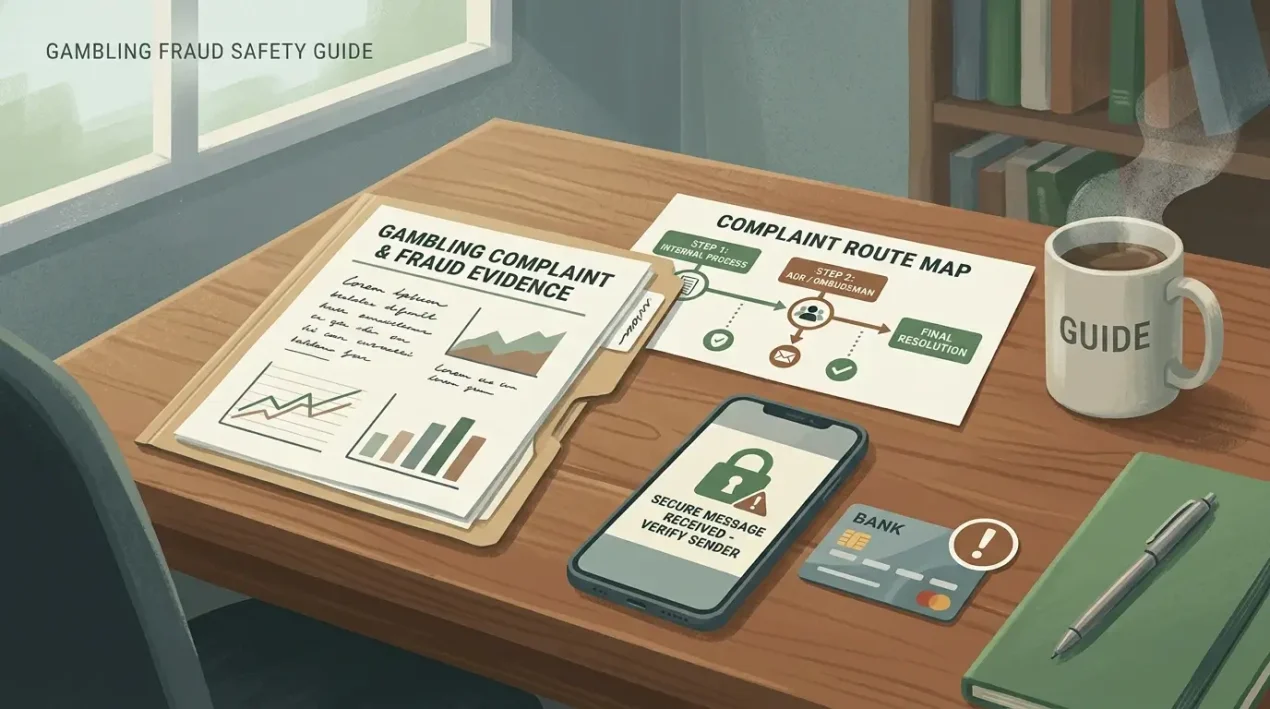
When money, identity details or unexpected gambling messages are involved, the safest first move is not to argue in a panic. Save evidence, identify whether this is a licensed-business complaint or a fraud signal, then use the right official route.
- Evidence first
- Official routes
- No recovery promises
Check licence status Support options
Start with the type of problem
Categorizing Casino Disputes for Faster Resolutions
A delayed withdrawal, a disputed balance and a suspicious message can look similar when the stress is high. They need different handling. A complaint about a GB-licensed gambling business normally starts with that business’s own complaints procedure. A phishing message, fake advert, cloned site or exposed payment detail needs a fraud and security route instead.
This distinction matters because the Gambling Commission’s complaint guidance is built around licensed businesses and Alternative Dispute Resolution where the licensed route applies. It does not turn an offshore or fake website into a protected dispute process.
Key takeaway
Save what happened before you act. Then decide whether you are dealing with a gambling complaint, a payment problem, unwanted marketing, or possible fraud.
Scenario analysis
Four common situations and safer next moves
Situation Safer next move
A GB-licensed gambling business has not resolved your complaint Use the business’s own complaints procedure first. If it remains unresolved after eight weeks, the business should tell you which approved Alternative Dispute Resolution provider applies. Do not assume this guarantees a refund or a particular decision.
A withdrawal is delayed and extra checks are requested Save the withdrawal request, terms, account messages and any identity or source-of-funds request. Reply only through the secure account route you can verify. Do not send documents through a random link from an email or text.
You receive an unexpected gambling email, text, call, advert or website link Do not click through to deposit or provide identity details. Keep the message and use National Cyber Security Centre reporting routes for suspicious emails, texts, calls, websites and adverts. For unwanted marketing, data and consent concerns may also fall within the UK data protection and electronic marketing rules.
Bank, card, wallet or personal details may be exposed Contact your bank or payment provider promptly. Use official fraud-reporting routes: Report Fraud for England, Wales and Northern Ireland, or Police Scotland for Scotland. Do not pay anyone who promises to recover gambling losses for a fee.
Evidence
Keep the records that show what happened
Good evidence is boring but useful. It helps you explain the problem clearly and avoids relying on memory after messages disappear or account screens change.
Do not edit screenshots in a way that removes dates, domain names, account messages or transaction references. If you need to protect personal data before sharing with someone else, keep the original copy private and only share what the official route asks for.
Evidence to save
- Exact domain and any public-register match you found.
- Account messages, complaint replies and timestamps.
- Withdrawal request, balance screen and transaction record.
- Terms shown at the time, including bonus and withdrawal wording.
- Suspicious emails, texts, adverts or caller details.
Licensed-business complaint
Use the business process before ADR
The Gambling Commission says gambling businesses must have fair, open and transparent complaints policies and procedures. Its guidance also explains that, where a licensed business cannot resolve a complaint within eight weeks, arrangements for Alternative Dispute Resolution must be available.
The practical route is to make the complaint clearly, keep the replies, and ask the business which ADR provider applies if the complaint remains unresolved after eight weeks. Avoid naming a provider from memory: the approved route for a specific business should be checked at the time.
Important boundary: ADR is a complaint route, not a promise of a payment outcome. It also does not automatically apply to every offshore, cloned or unlicensed website.
Unwanted marketing can be a separate concern
Unsolicited gambling messages are not just annoying; they can be a warning sign if they ask you to click, deposit, verify identity or move money quickly. Gambling Commission and Information Commissioner’s Office materials treat consent, direct marketing and electronic marketing rules as serious issues.
That does not mean every message proves wrongdoing by itself. It means you should avoid engaging through the message, save a copy, and use official reporting or complaint routes rather than relying on the sender’s own instructions.
Safer assumptions
- A real complaint needs a clear record and the correct route.
- A suspicious link should be treated as unsafe until proven otherwise.
- A payment problem may need bank or payment-provider action quickly.
Risky assumptions
- That a website badge proves a licence.
- That a delayed withdrawal always means fraud.
- That someone promising recovery can get lost gambling money back.
Useful next pages
Licence status Check the exact domain Use the official-register route before relying on a logo, footer claim or message. Money terms Read payment and ID checks Understand withdrawal terms, verification requests and customer-fund wording. Support Add protective friction Use blocking and support routes if gambling feels hard to control.
If the problem is making you gamble more
A dispute can trigger more deposits, chasing losses or searching for another site. If that is happening, pause the complaint admin and add protection first: use blocking tools, bank gambling-payment blocks, and a recognised gambling support service.